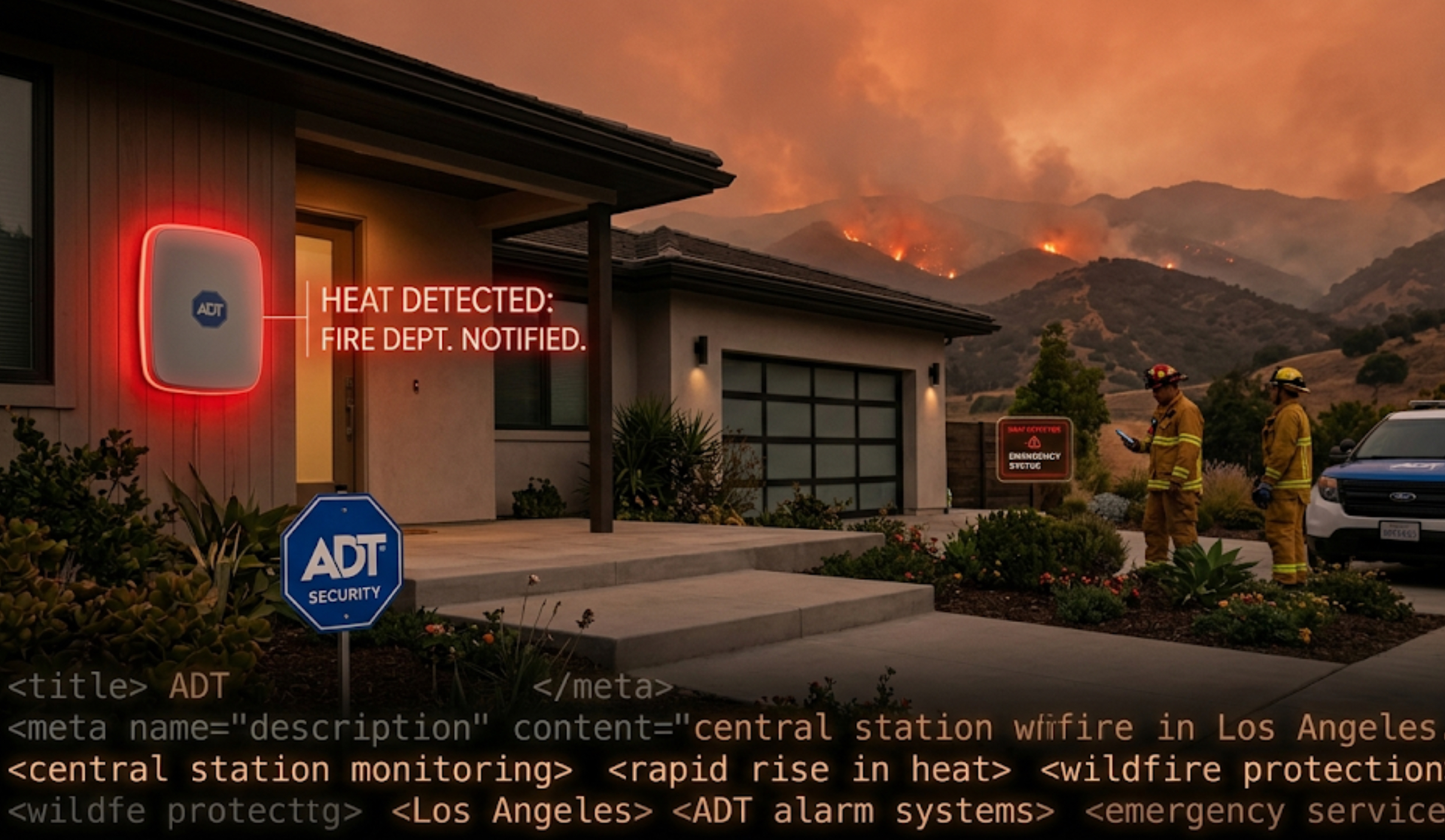
 The Science of Survival: Rapid Rise in Heat Monitoring">
In the face of intensifying environmental threats, the difference between a minor incident and a total loss often comes down to seconds. As climate patterns shift, urban-wildland interfaces face unprecedented risks. The recent wildfires in Los Angeles served as a harrowing reminder that passive protection is no longer enough; active, intelligent monitoring is the new gold standard for home safety.
The Science of Survival: Rapid Rise in Heat Monitoring
While traditional smoke detectors are essential, they are often the last to know when a fast- moving wildfire approaches. Rapid rise in heat monitoring technology tracks temperature fluctuations with precision. Unlike standard sensors that trigger at a fixed threshold, these systems detect an abnormal rate of temperature increase—often identifying a fire before smoke even enters the structure.
Why Central Station Monitoring Matters: When a sensor is triggered, it doesn't just ring a bell in an empty house. It alerts a 24/7 Command Center. Professional dispatchers confirm the threat and contact local fire departments immediately, ensuring help is on the way even if you are not home or are unable to reach a phone.
Case Study: The Los Angeles Wildfire Response
During the most recent wildfire outbreaks in the hills of Los Angeles, residential security became the frontline of defense. Reports highlighted several instances where ADT alarm systems played a pivotal role. As embers began to ignite perimeters, ADT’s integrated heat sensors triggered immediate alerts to their central monitoring stations.
This early detection allowed for two critical outcomes:
• Asset Protection: Fire crews were dispatched to specific addresses before the structures were fully engulfed, allowing for targeted intervention that saved numerous high-value properties.
• Medical Initiation: Beyond fire suppression, ADT systems initiated emergency medical services (EMS) for residents overwhelmed by smoke inhalation or heat exhaustion. By the time homeowners realized the severity of the air quality, medical professionals were already en route.